Showing posts with label cool. Show all posts

Wednesday, October 22, 2014

Process Theology

It is really interesting and exciting stuff, but you cannot get from here to there on it in a hundred words or less. Our little tiny congregation church of progressive Christians had fully 14 people attend the first book club discussion on a book by John Cobb and David Griffin entitled Process Theology: an Introductory Exposition. (To give you an idea of what kind of congregation this is, on a good Sunday we will have 25-30 people attend services. So that means about half the people in the church will first of all read a heavy, academic assignment, and then come out on a weeknight for a 90-minute discussion.)

 Here's the scoop in only the most general terms: it's a 20th century attempt to apply the concepts of Alfred North Whitehead's philosophy to our thinking about God. It is dense and fun stuff. Its chief progenitors are John B. Cobb, Jr. and Charles Hartshorne. And it is seminal in the thinking of progressive Christians, although most of us may not even be aware of origins, we embrace the main ideas. I'll be writing about this some more, but for now let me lay out the concepts of God that process thinking rejects. You cannot but notice that these ideas are foundational in traditional unitheistic religions. So we will not take as our starting point the following assumptions about God:
  1. God as cosmic moralist, that his fundamental concern is the development of moral attitudes. Which makes such attitudes intrinsic to the basic importance of human beings. No.
  2. God as the Unchanging and Passionless Absolute. God is not really related to the world, that his influence upon the world is "in no way conditioned by divine responsiveness to unforeseen, self-determining activities of us worldly beings." No.
  3. God as controlling power who determines every detail of the world, even down to deciding who dies in natural disasters, finding a parking place, or who wins a football game. No.
  4. God sanctions the status quo. The previous three notions set the stage for this one. Cosmic moralist = primary interest in order; unchanging absolute = God has established an unchangeable order for the world; controlling power = God wills the present to exist. Therefore obedience to God is preserving the status quo. No.
  5. God is male. He is the archetype of the "dominant, inflexible, unemotional, completely independent (read 'strong') male. No.
More on all this later. As you might imagine, if you start with the rejection of these age-old notions of the nature of God, you're definitely not in Kansas anymore.

Monday, August 25, 2014

Poof!


Sparky
 Astronomers have for the first time caught a glimpse of the earliest stages of massive galaxy construction. The building site, dubbed “Sparky,” is a dense galactic core blazing with the light of millions of newborn stars that are forming at a ferocious rate.

The discovery was made possible through combined observations from NASA’s Hubble and Spitzer space telescopes, the W.M. Keck Observatory in Mauna Kea, Hawaii, and the European Space Agency's Herschel space observatory, in which NASA plays an important role.

A fully developed elliptical galaxy is a gas-deficient gathering of ancient stars theorized to develop from the inside out, with a compact core marking its beginnings. Because the galactic core is so far away, the light of the forming galaxy that is observable from Earth was actually created 11 billion years ago, just 3 billion years after the Big Bang.

Although only a fraction of the size of the Milky Way, the tiny powerhouse galactic core already contains about twice as many stars as our own galaxy, all crammed into a region only 6,000 light-years across. The Milky Way is about 100,000 light-years across.
(Source)

 And we are under the illusion that our affairs are . . . what's the phrase "earth-shaking"? That our experiences are of consequence. That somehow what we say and do matters. What truly is earth-shaking is that there is no word in any language I know to describe how tiny and insignificant we are. Nothing we can say or think can capture this immensity . . .

And yet we've discovered the science to reveal this all to us. And we keep having these questions that won't go away.

Saturday, March 29, 2014

You're Not Going to Believe This

If you google these guys, you'll find a lot more of their stuff. Apparently, they can pack concert halls. Easy to see why after you hear them.


Thursday, October 24, 2013

Those Happy Danes!

Copenhagen
Denmark is the country with the happiest people on the planet. This, from a report that ranks such countries. Before you ask, the United States is 17, behind Canada (6), and Mexico (16). And just because you're curious and probably won't look at the report, the other leaders were Norway and Switzerland, behind Denmark. If you want a quick lowdown, this article will give it to you.

What I'm interested in here though are the reasons given for the state of bliss in Denmark. Why every country in the world that is not at least in the top dozen or so in happiness should not be poring over these matters quite seriously is something we just have to wonder about.

So the reasons why the Danes are the happiest people in the world. There are six factors that together "explain three quarters of differences in life evaluations across hundreds of countries and over the years."
The six factors for a happy nation split evenly between concerns on a government- and on a human-scale. The happiest countries have in common a large GDP per capita, healthy life expectancy at birth and a lack of corruption in leadership. But also essential were three things over which individual citizens have a bit more control over: A sense of social support, freedom to make life choices and a culture of generosity. 
But why Denmark, you may wonder. Well, according to the report, this is why. And the following is quoted from this web piece.

1. Denmark supports parents

While American women scrape by with  an average maternal leave of 10.3 weeks, Danish families receive  a total of 52 weeks of parental leave. Mothers are able to take 18 weeks and fathers receive their own dedicated 2 weeks at up to 100 percent salary. The rest of the paid time off is up to the family to use as they see fit.

But the support doesn't stop at the end of this time. Danish children have access to free or low-cost child care. And early childhood education is associated with  health and well-being throughout life for its recipients --  as well as for mothers. What's more, this frees up young mothers to return to the work force if they'd like to. The result? In Denmark,  79 percent of mothers return to their previous level of employment, compared to 59 percent of American women. These resources mean that women contribute  34 to 38 percent of income in Danish households with children, compared to American women, who contribute 28 percent of income.

2. Health care is a civil right -- and a source of social support

Danish citizens expect and receive health care as a basic right. But what's more, they know how to effectively use their health systems. Danish people are in touch with their primary care physician an average of nearly seven times per year,  according to a 2012 survey of family medicine in the country. And that means they have a single advocate who helps them navigate more complicated care.

"This gatekeeping system essentially is designed to support the principle that treatment ought to take place at the lowest effective care level along with the idea of continuity of care provided by a family doctor,"  wrote the authors of the family medicine survey.

By contrast, Americans seek medical care an average of fewer than four times per year and they don't just visit their general practitioner -- this figure includes emergency room visits, where many uninsured Americans must access doctors. This diversity of resources means that many Americans don't have continuity of care -- not a single medical professional advocating for them and putting together a comprehensive medical history.

3. Gender equality is prioritized

Denmark regularly ranks among the top 10 countries in a World Economic Forum's yearly report that measures gender equality. While no country in the world has yet achieved gender parity, Denmark and other Nordic countries are coming close. That is in no small part because of the strong presence of women in leadership positions. Reported the World Economic Forum:
The Nordic countries were also early starters in providing women with the right to vote (Sweden in 1919, Norway in 1913, Iceland and Denmark in 1915, Finland in 1906). In Denmark, Sweden and Norway, political parties introduced voluntary gender quotas in the 1970s, resulting in high numbers of female political representatives over the years. In Denmark, in fact, this quota has since been abandoned as no further stimulus is required.
Indeed, the country currently has its first female prime minister, Helle Thorning-Schmidt. . . .
But government leadership merely exemplifies greater gender balance throughout the culture.

4. Biking is the norm

In Denmark's most populated and largest city, Copenhagen, bikes account for 50 percent of its residents' trips to school or work. Half. Half of commuting happens on a bike in Copenhagen and that doesn't just improve fitness levels and reduce carbon emissions, it also contributes to the wealth of the city, reported Forbes:
Researchers found that for every kilometer traveled by bike instead of by car, taxpayers saved 7.8 cents (DKK 0.45) in avoided air pollution, accidents, congestion, noise and wear and tear on infrastructure. Cyclists in Copenhagen cover an estimated 1.2 million kilometers each day –- saving the city a little over $34 million each year.
What's more, just 30 minutes of daily biking adds an average of one to two years to the life expectancy of Copenhagen's cyclists.

5. Danish culture puts a positive spin on its harsh environment

Here's how Danish people turn lemons into spiced mulled wine: Ever heard of the concept of hygge? While some would define it as cultivated coziness, hygge is often considered the major weapon in combatting the dreary darkness that befalls the Nordic country over the winter. In a place where the sun shines fewer than seven hours during the height of the winter solstice -- a level of darkness that can (and does) stir depression and sad feelings -- the concept of a cozy scene, full of love and indulgence, can help to mitigate some of the season's worst psychological effects.

After all, both strong social connections and many of the indulgent foods associated with hygge -- such as chocolate, coffee and wine -- are mood boosters.

6. Danes feel a responsibility to one another

Danes don't prioritize social security and safety simply so they can receive benefits; there's a real sense of collective responsibility and belonging. And this civic duty -- combined with the economic security and work-life balance to support it -- results in a high rate of volunteerism. According to a government exploration of Danish "responsibility":
Denmark is a society where citizens participate and contribute to making society work. More than 40 percent of all Danes do voluntary work in cultural and sports associations, NGOs, social organisations, political organisations, etc. There is a wealth of associations: in 2006, there were 101,000 Danish organisations -- worth noting in a population of just 5.5 million.
The economic value of this unpaid work is DKK 35.3 billion. Combined with the value growth from the non-profit sector, public subsidies and membership fees, the total economic impact of the sector represents 9.6 percent of the Danish GDP.
But that sense of stewardship isn't just extra-governmental: Danes also take pride in their involvement with the democratic process. During the last election in September 2011, for example, 87.7 percent of the country voted.

Sunday, June 9, 2013

How Cool is This?

This would definitely make you forget what you were paying for the groceries. Bravo!


Wednesday, November 28, 2012

Are You Ready for This? The Stones at Fifty Years


Rock 'n Roll will never die--but it will get damned ancient-looking.
From every indication I've seen, the Stones just blew them away in London a couple of nights ago. I think they have one more show there and then three in the New York City area. Here is one of the many stories. Looks like they had a great lineup of songs, including one new one. And just in case you're in a mood to remember the greatest of the Stone's albums over fifty years, this list from Rolling Stone should get you started. And are you ready for this? You can listen each one of these fantastic albums via Spotify from right on the list page. Check out some of the early bluesy stuff. Man, these guys can kick it.

One more thing . . . are you ready for this? The average age of the Rolling Stones is higher than that of the US Supreme Court by a about a year and a half. You can look it up.

And if you're tempted to just O.D. on the Stones, Rolling Stone (the magazine) has a massive retrospective of what must be every story they ever did on the band for fifty years. You can find that right here.

Can't quit without just a little taste. This song is one you never hear played, but it's one of my most favorites. It's called "100 Years Ago" from the album "Goat's Head Soup," a great, but underrated album. That's Mick Taylor on the fabulous guitar work, a guy who never got enough credit in the band. He was superb.


Tuesday, November 27, 2012

Speaking of Very Cool

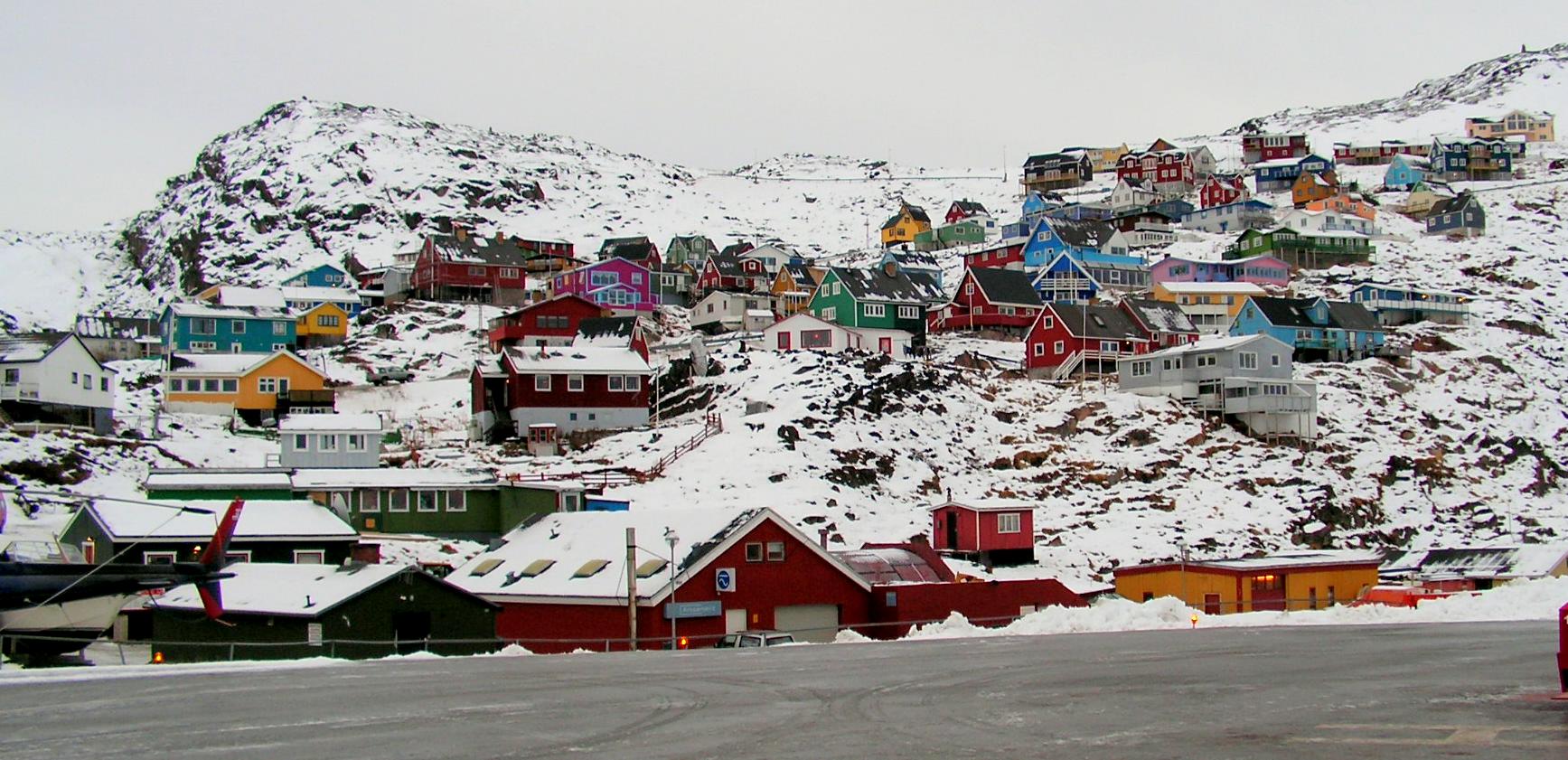
The Snowy Little Town of Qaqortoq, Greenland

Look, Ma! No 7 Eleven!
I'll betcha this is one of Santa's first stops.

Thursday, September 13, 2012

Read-a-Tat-Tat

Somebody commented: "Is it sexist to say she's stacked?" (har, har)

Just one of a collection of librarian tats. I mean, how cool is a librarian tattoo? And how cool is the librarian who wears one? You can see the rest of 'em here.

Tuesday, May 22, 2012

One Minute Physics


Well, it's not really a minute, but it goes by really fast--a little too fast, actually--and the learning part doesn't even take up the whole video. But this is pretty cool.

I found this right here.

Thursday, May 17, 2012

Just Cool as Hell


I thought this was just too cool for words. Don't ask me why. Some things just grab you. I found it at this website.

Tuesday, April 3, 2012

It'll Only Take a Minute

Well, just a little bit over a minute to be purely precise. That is, to watch this short movie. I was just talking recently about the wonders of the Internet and the great stuff you can find there. This fits into that category. It's becoming ever more apparent to me that technology is just becoming totally impenetrable for me. When I was a kid, you could understand the basics of things like the internal combustion engine, the movie camera, light bulb, stereo record, and with a little research perhaps could make these things understandable to somebody else. No longer. I have no idea how this little movie does its tricks, much less how things get put on the Internet, transferred everywhere, etc.). All I can say is, the tricks are fascinating.


Source: Here

Tuesday, March 13, 2012

If You Like Books . . .

. . . you will probably like this web site: Bookshelf Porn. What  a great name! I sent the link to this site to a good friend of mine in Louisiana who used to own a bookstore just off College Drive in Baton Rouge. I used to frequent the place when I was in graduate school. The big chains, Barnes & Nobles and Borders, put him out of business. He's in the history department now at the Univ of Southeaster Louisiana in Hammond. Anyway, I sent Charlie the same link I'm posting here. Can't wait for his reaction. Can't resist posting one of these amazing pictures.

How cool is this?

Wednesday, December 14, 2011

Muy Excellent!

Here's yet another of these bands and tunes I discovered just surfing around. Gems like this one are scattered all over the Web. This was Spinner's "song of the year." I had never heard of the band before, not unusual, but the band itself is a bit unusual. All women.


Love the lady rockers! Here's another video. This one very cool:


Wednesday, September 14, 2011

Too Cool

Sometimes you run across things just too cool not to share. A friend recently sent me this link and accompanying video. The link will tell you what you're seeing and the scientific explanation. Knock yourself out.

Saturday, September 10, 2011

Monday, August 29, 2011

Art Museums

Writing about that trip we took to Europe last year, I was reminded that when we were in Madrid we visited two world class art museums. (Did not visit any museums in Ireland, but Ireland came out way ahead on pubs over Spain.) The first was of course The Prado, Museo de Prado, one of the greatest art museums in the world. Going to The Prado was my only must-do thing on the whole trip. I've wanted to go there for years. It was fabulous. The paintings of Goya alone are worth the trip. Throw in Velazquez, Titian, and Bosch and you are into major overkill. The other museum, which was devoted primarily to Spanish artists, was the Museo Nacional Centro de Arte Reina Sofia, which has only 20th century art inside. It is a relatively new museum; it just opened in 1992.

OK, I'll be right up front here. I love modern art. Places like these art museums draw me in because such places, chock full of celebrated art, pulls me into a world that seems much more human and empathetic than the very real world in which it was created and in which it now stands long after its creator has passed into a world beyond this one. It's almost as if great art lifts you out of the so-called "real world" and shows you another one, the real "real world". Perhaps that's what draws us to it.

Take this wonderful interplay of shapes and colors in this Joan Miro work from 1938, for example. This piece is in the Museo Nacional Centro de Arte Reina Sofia, the Queen Sofia Museum. I'm not certain how many by Miro the museum holds. For some reason, I did not purchase the museum book that you can always find in the gift shop. Maybe that was a low euro day, because I usually make a point of buying the book. This one is called Retrato II.

Looking up the piece above to show you whetted my appetite for some more. So I went and checked on the Miro pieces Susan and I have seen in other places. We saw this one spring last year in the MOMA. It's called A Beautiful Bird Revealing the Unknown to a Pair of Lovers. This is actually a drawing in goache and charcoal on paper from the early World War II years.

Joan Miro, goache & charcoal on paper, 1941

It's difficult to stop once you get started trying chasing these things down these things down. Here's another Miro we saw at the MOMA. This is The Birth of the World. 

Joan Miro, oil on canvas, 1925
I would not pretend to say anything about these pieces other than they spur in me a welter of thoughts about the nature of human beings, our understanding of beauty and truth and the world around us. And they stir in me feelings that I can get only in the presence of great art . . . the kind of feelings you can't hang words on.

To my delight I found a short little YouTube video that lets you look at a bunch more of Miro's works. So if you have not had enough to this point, there's more. And of course, if you have had enough, it's likely you never read down this far anyway. After fiddling awhile with it, I could not get the video to embed in this write-up. But if you want to watch it, you can find it here. Enjoy!

Friday, August 12, 2011

Very Cool!

Hey, check out what happens when you visit this brewing company's site and you click that you are not yet 21. Then tell them you are 21 . . . and you'll just get thirsty.

Sunday, July 10, 2011


What you see here is the Pee Tree. This "toilet" is from the Netherlands, somehow that doesn't surprise me. But you will be entertained, I think, by the eleven other fabulous (or not so much) toilets that you can find right here. And yes, I am restraining my impulse to subject you all to a torrent of crappy puns.

Friday, December 31, 2010

Best ofs . . .

Below are two of the music videos cited on Slate's "Browbeat" as among the best for the past year. (Here) You can draw your own conclusions about the music. But the videos are very cool.

Herky jerky time-lapse camera and fascinating.


Hip Hop . . . and almost obligatory language advisory.


Finally, I can't resist just putting this song, "We Used to Wait" by Arcade Fire in here. It's from their album Suburbs, which would certainly be on my list of the best in 2010.


This is the first of what will probably be several posts on the "best ofs" for 2010 which I will post during January of the New Year.